Published Nov 17, 2026 · Updated Nov 18, 2026
ChatGPT Business in Vietnam: VAT invoices and accounting
How ChatGPT Business self-serve billing works, which OpenAI records are available, and what Finance, Procurement and IT teams should verify before recording the cost in Vietnam.
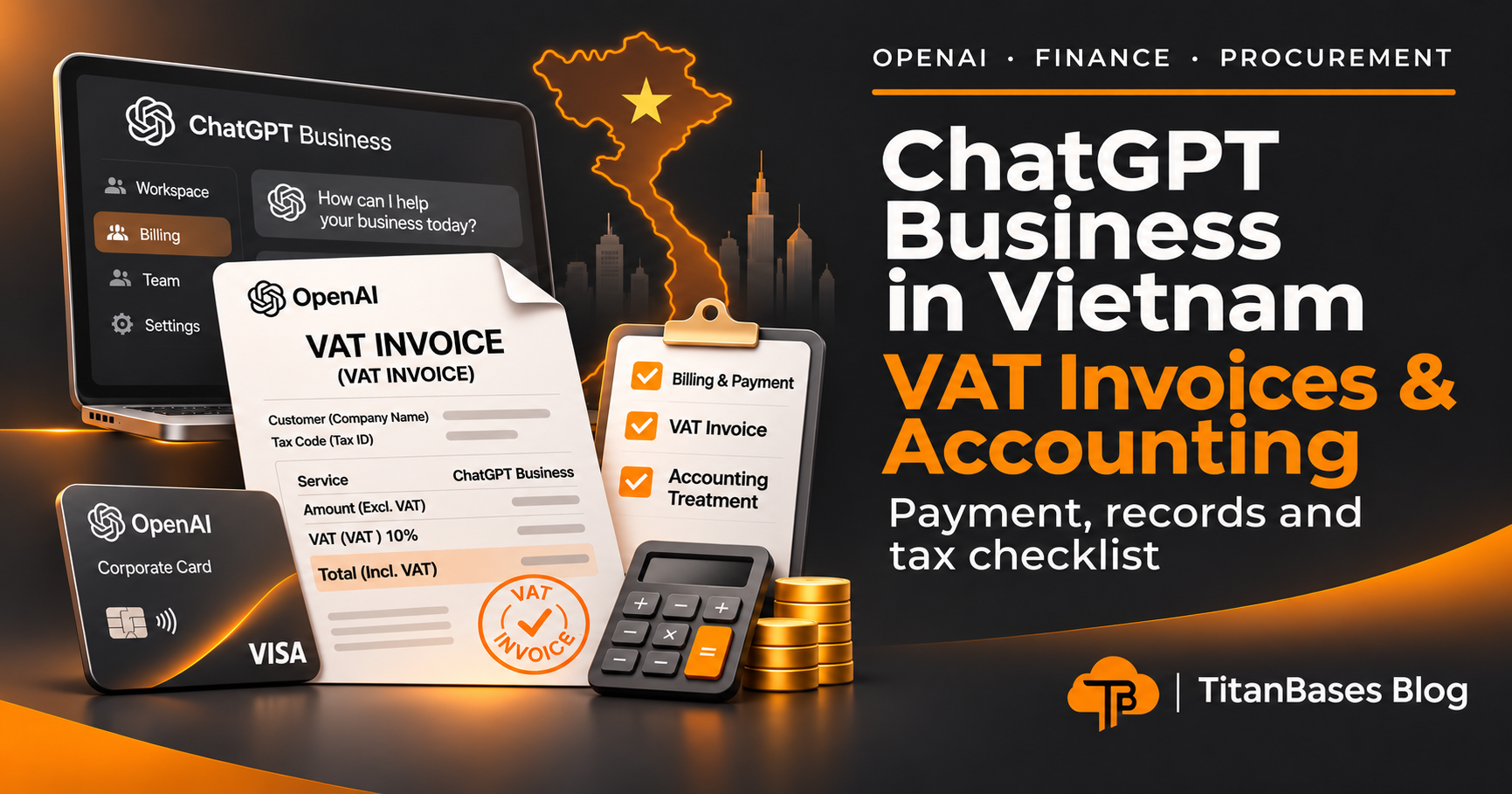
OpenAI documents ChatGPT Business self-serve billing through credit or debit cards, with workspace owners able to access invoices in Billing. For a Vietnam-based company, an OpenAI invoice should not automatically be treated as a Vietnamese domestic VAT e-invoice. Cost recognition, tax treatment and deductibility depend on the transaction record, service classification, the supplier’s tax status and the rules that apply to the business. This guide gives Finance, Procurement and IT teams a practical control checklist before rollout.
1. How OpenAI bills ChatGPT Business
ChatGPT Business runs as a self-serve product: the company creates its workspace directly, manages seats, and pays in Billing using a credit or debit card. OpenAI states that self-serve does not support purchase orders, bank transfer, or net payment terms; invoiced payment requires an Enterprise or Education sales discussion. TitanBases supports advisory, referral and onboarding within its SMB Channel Partner scope; the customer pays OpenAI directly and retains workspace control. Read our guide to SMB Channel Partner, OPN Select and Authorized Reseller models: /blog/openai-partner-types-vietnam.
2. Two ways to buy ChatGPT Business in Vietnam
| Check | Direct OpenAI / SMB onboarding | VND intermediary |
|---|---|---|
| Payee | OpenAI through Billing and a payment card | Vietnamese service company; verify its status, contract and payment flow |
| Workspace control | Company creates the workspace, holds Primary Owner and manages billing | Confirm in writing who creates the workspace, holds Primary Owner and controls billing |
| Records | OpenAI invoice + payment evidence + tax records where applicable | A domestic VAT invoice may represent the intermediary’s own service; read the service line precisely |
| Compliance and cost | Follow checkout and applicable programme terms; offers follow the eligible link | Check terms, workspace administration model, service fees, FX and tax |
| Price transparency | Pricing and promotion are shown in the OpenAI checkout / eligible partner flow | Confirm product scope, service charge, renewal conditions and exchange-rate treatment |
3. Four checks before payment
- Who receives payment and appears as the contracting party on the records: OpenAI or an intermediary?
- Does the company retain Primary Owner, billing administration and workspace recovery rights?
- Do the contract, invoice and payment trail consistently describe the actual product or service?
- Has the finance lead or tax adviser confirmed the evidence pack, FCT obligations and VAT/CIT treatment for this transaction?
4. A procurement and accounting workflow
- Create the workspace using a company-domain email; set at least two administrators and confirm that the company holds Primary Owner. Eligible companies can use TitanBases’ ChatGPT Business 20% programme at /landing/chatgpt-business; checkout terms shown at registration govern eligibility.
- Pay directly in Billing with a corporate card or a method approved by internal finance policy; enter the correct legal entity, registered address and tax ID in Billing Details.
- Retain the OpenAI invoice, non-cash payment record, internal approval and evidence that the tool supports business activity.
- Have Finance or a tax adviser confirm service classification, the supplier’s tax status and any FCT/VAT/CIT obligations before filing or posting. Use the ChatGPT Business Standard and Premium pricing guide at /blog/chatgpt-business-pricing-standard-premium-signup for budgeting.
Prepared by TitanBases Engineering Team
TitanBases engineers share practical guidance from cloud, data and AI delivery work, with technical review focused on production architecture, security and operations.